By Lily Rice – September 12, 2022
If you thought I was done talking about wetlands after my last post, you are unfortunately mistaken. Wetlands are quite possibly the most fascinating ecosystems on the planet (in my opinion). Especially peatlands, where select groups of plants have become highly adapted to the harsh conditions present.
This week I wanna talk about the prevalence of a certain group of plants found in bogs and other nutrient-poor, acidic wetlands; that group being members of the heath family: Ericaceae.
Ericas are likely quite familiar to most of us. If you’re growing rhododendrons & azaleas, those are Ericas. If you live in more boreal regions of the world, you’ll likely know the plant, Pipsissewa. Most likely, you’re familiar with the tart, round fruit of blueberries & cranberries. Ericaceous plants are quite numerous, with roughly 4250 species in their group (Christenhusz, 2016). Plants in Ericaceae are widespread, with members found on all continents besides Antarctica, but the majority of the distribution occurs in temperate regions north of the Tropics of Cancer (INaturalist), mostly due to glaciation events which carved out landscapes suitable for the formation of peatlands, Many of the environments Ericas can be located in are acidic wetlands, such as bogs, which are also (mostly) located in temperate, boreal areas.

Bogs are acidic peatlands- low in available nutrients, low in soil oxygen, and high in moisture. This is a kettle-bog in Burton, Ohio.
I’ve been hiking around in bogs, fens, and swamps, and I have begun to notice a trend: most of the forbs and shrubs I encounter are in the plant family Ericaceae, and more broadly, the order Ericales. Hiking around the acidic woods adjacent to these peatlands, you’ll find Ghost Pipes (Monotropa uniflora), Bog Labrador Tea (Rhododendron groenlandicum), Pipsissewa (Chimaphila umbellata), Shinleaf (Pyrola elliptica) Teaberry (Gaultheria procumbens), Bearberry (Arctostaphylos uva-ursi), etc. In the peatlands themselves, the list of ericales expands tremendously: Purple Pitcher Plant (Sarracenia purpurea), Swamp Candles (Lysimachia terrestris), Wild Rosemary (Andromeda polifolia) American Cranberry (Vaccinium macrocarpon) & a whole slew of Blueberries (Vaccinium spp.), Early Azalea (Rhododendron prinophyllum), Sheep Laurel (Kalmia angustifolia), Leatherleaf (Chamaedaphne calyculata), etc., etc; you get the point.

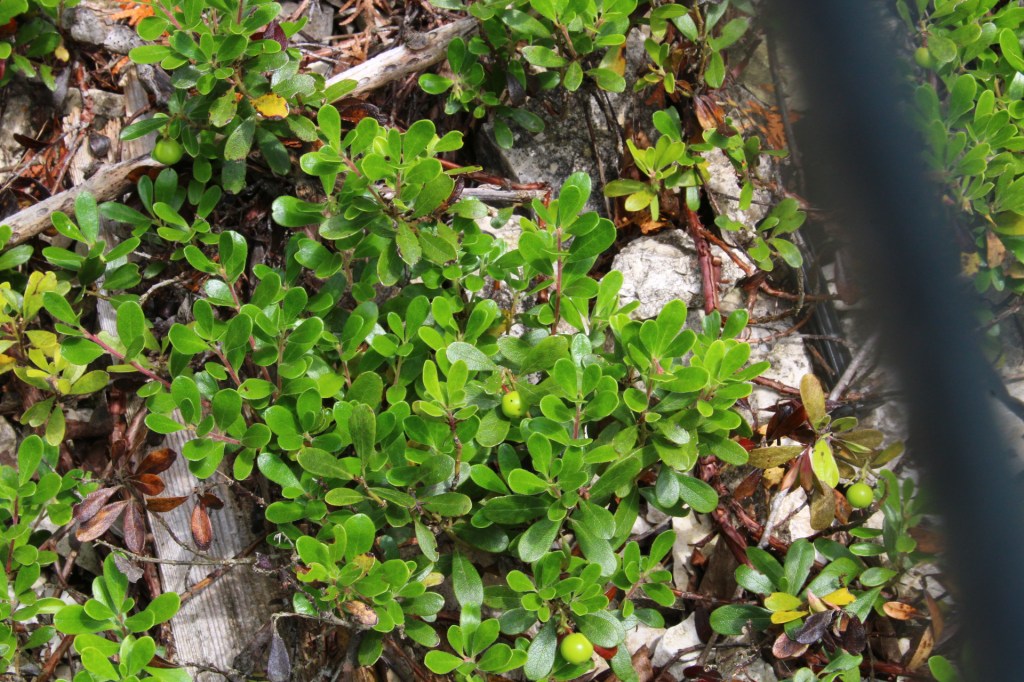
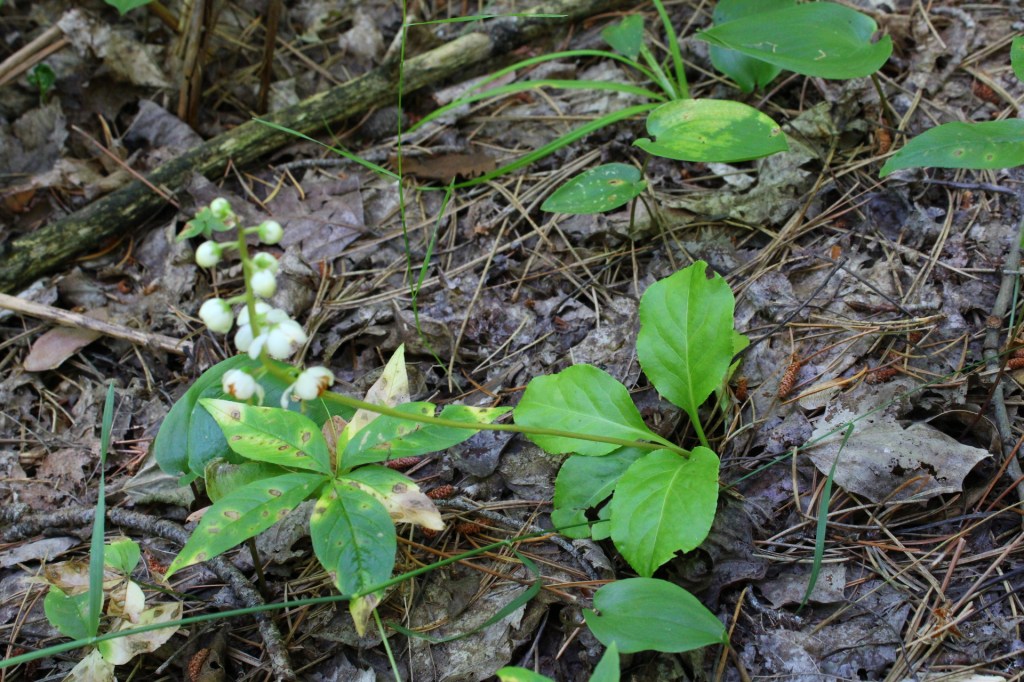


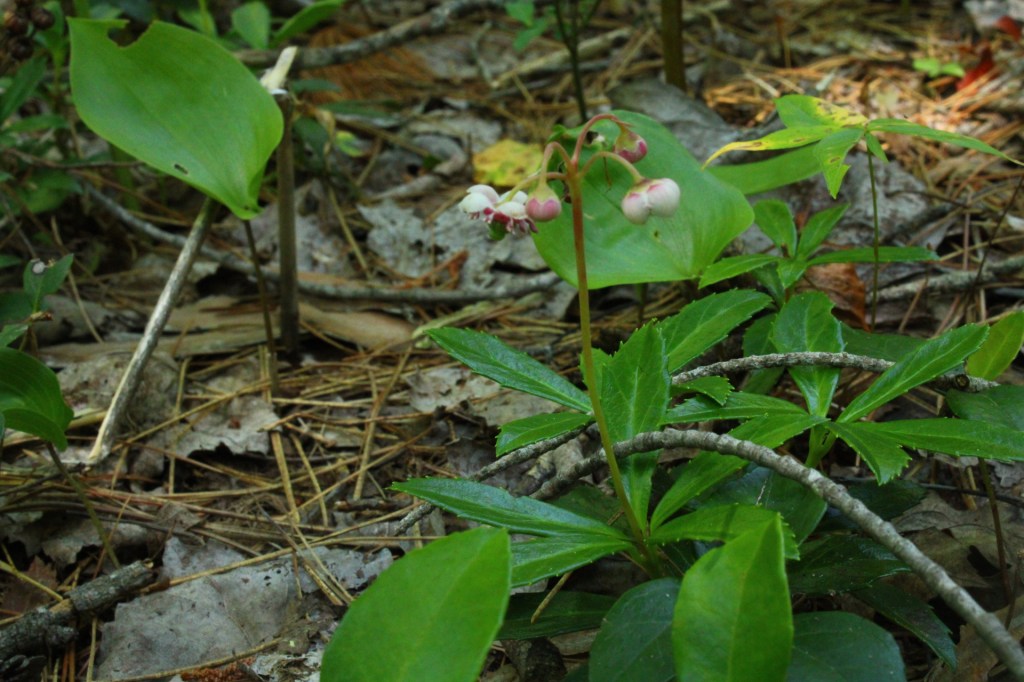
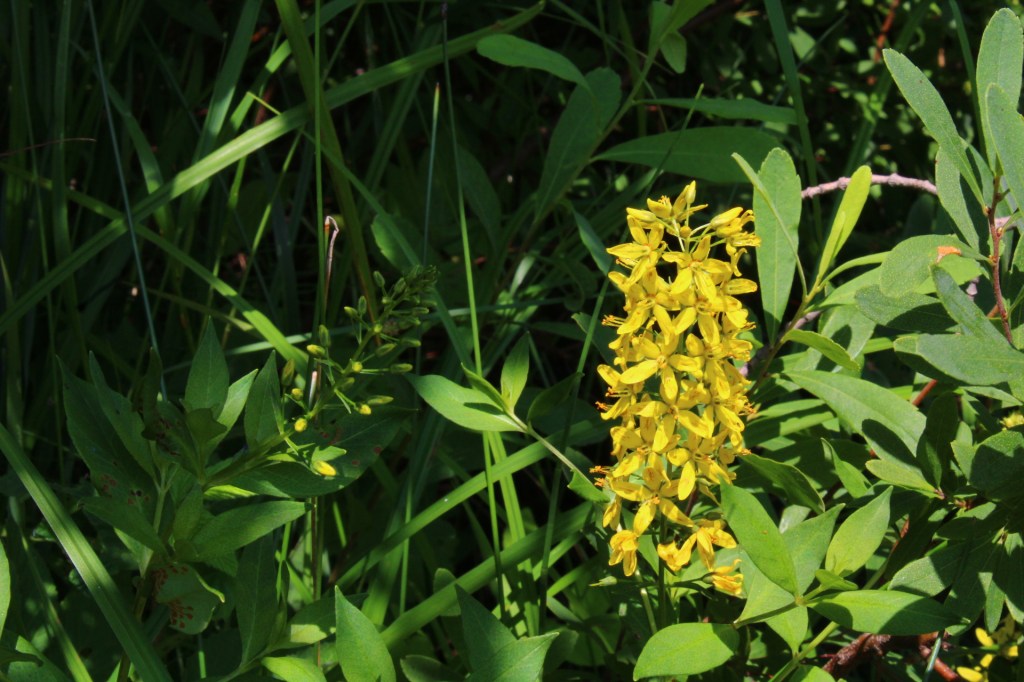

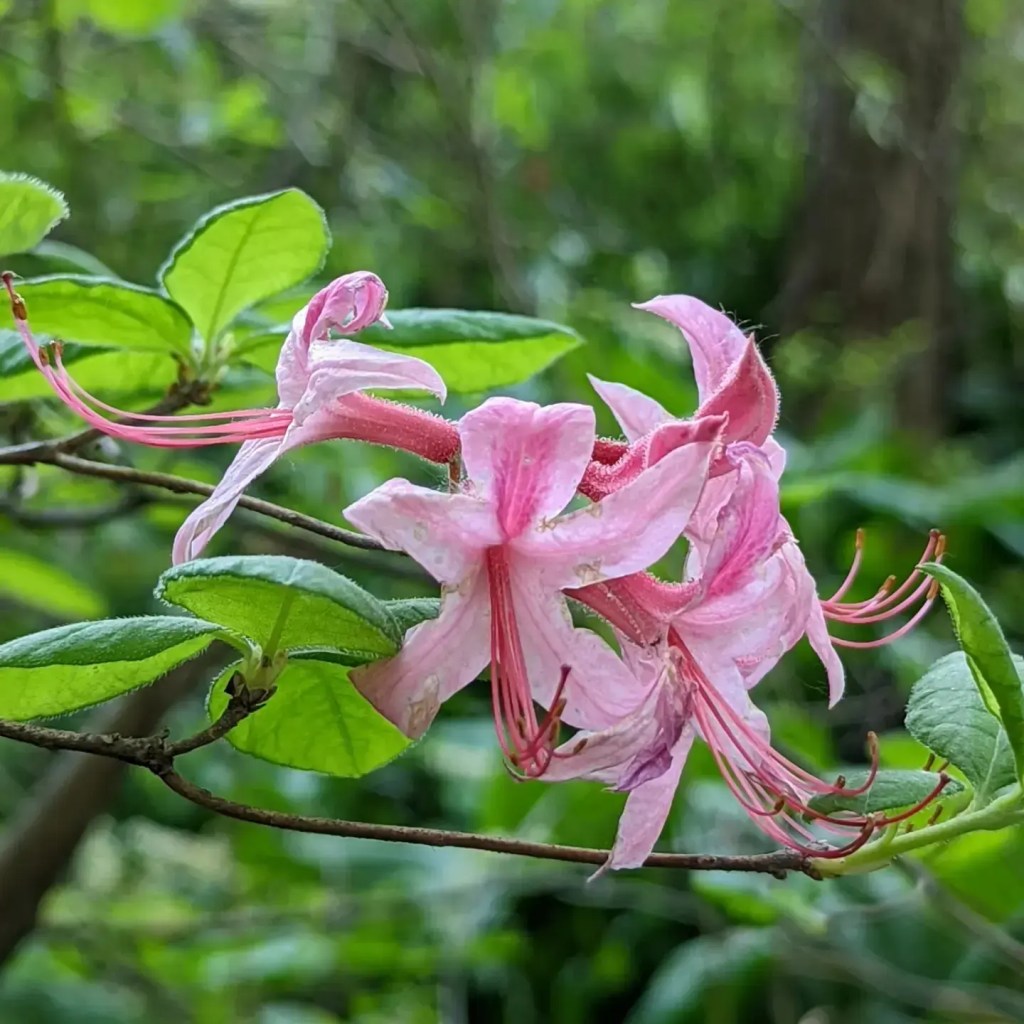

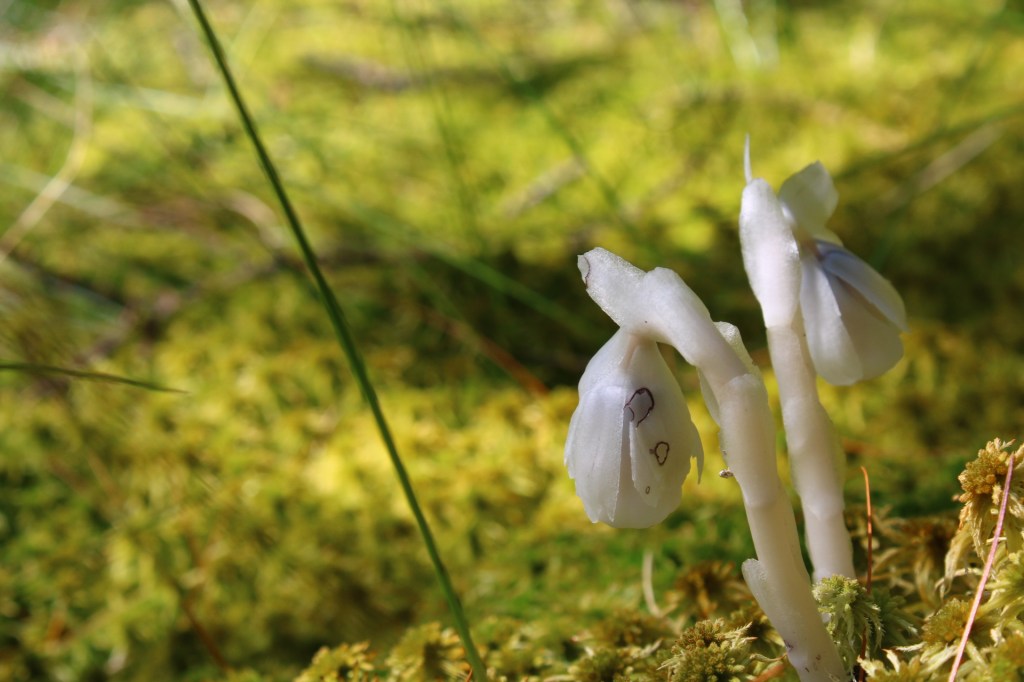
If you were able to make it through that list of Ericas, then you may wonder why Ericas are so prevalent in these ecosystems. This question came to me while I meandered through a Michigan bog and I was amazed by all the Ericoid plants I identified. It seemed at least half of the bog plants I encountered had a common-Erica-ancestor. Obviously, it seems, that Ericas underwent adaptive-radiation in bogs and other low-nutrient, acidic environments; but to what do Ericas owe their success?
Lets start by listing challenging environmental characteristics that Ericas need to overcome:
- Waterlogged soils
- Low soil oxygen
- Low nutrient availability
- Acidic soils (3.6-6.6)
- High heat/solar irradiance
That’s no easy task.
Overcoming the proverbial gauntlet thrown down by these peatlands has been thanks to several adaptive traits shared amongst the majority of Ericaceous plants.
According to Soza et. al. the ancestors to Ericaceae and even the Ericales had two Whole Genome Duplication (WGD) events. WGD events do exactly what they say, make copies of the entire set of DNA. The resulting organisms can have more than 2 copies of their DNA in their cells. These extra copies of genes can counter-intuitively be utilized in different functions than their originals; many plant species evolve in this manner- plants are very adaptable organisms. This can be a hard concept to grasp, so lets utilize my favorite theme for an analogy: buckets. Imagine you are are selling tacos out of two buckets that you own. Each bucket holds your inventory of tacos and nothing else. You simply walk down the street selling bucket-tacos, but you have very little room to put the money gained from this endeavor, thus, limiting your taco-selling potential. If, lets say, you suddenly gained two more identical buckets, you could use them to sell more tacos out of, but realistically, your taco-selling ability is limited by places to store your cash. Instead, those buckets could be put to better use holding that sweet, sweet bucket cash. Now, you are a more successful bucket-taco salesperson. In this analogy, the buckets represent genes, and the tacos are gene products. The two buckets (genes) were already limited by your current constraints; the addition of two more identical buckets allowed you to adapt to the situation and become more efficient in your taco-hungry environment. Relating this back to our taxonomic focus, the WGDs created additional genes that could be utilized in these harsh environments, and at the moment, is the one of the most logical explanations for the adaptive radiations seen across Ericas.
Moving on, many peatland plants have adapted to the harsh conditions through convergent traits. These similar traits include shallow root systems to access more oxygen (Rydin & Jeglum, 2006); thick, evergreen leaves that limit nutrient use (as seen in Rhododendrons); carnivory to obtain more nitrogen & phosphorous (as seen in Sarracenias); thicker cuticles to protect from high solar irradiance (as seen in Rhododendrons & Chamaedaphnes); and most importantly, mutualistic relationships with mycorrhizal fungi.
As a brief refresher, mycorrhizal fungi are beneficial fungi that associate with the roots of plants. The fungal hyphae extend the reach of plant roots and in-turn expand the available nutrients and water to the plant. In return, the fungi is supplied with sugars from the plant. Ericoid mycorrhizae (E.M.) are essential counterparts in peatlands. E.M. are capable of degrading complex organic compounds and efficient at scavenging for sources of nitrogen & phosphorous (Read et. al., 2004). The coevolutionary associations of Ericas & E.M. have greatly assisted in the dominance of Ericas in peatlands. Indeed, Schwery et. al. who studied speciation of Ericas in low-nutrient, montane regions have corroborated these findings, and added the earlier point of investment in thick, leathery leaves greatly assisted in the speciation of Ericas in these low-nutrient regions.
If you so happen to find yourself in a peatland, take a second to ponder the great diversity of Ericas around you, and see for yourself why bogs absolutely love Erica.
Citations:
- Christenhusz, Maarten J.M., and James W. Byng. “The Number of Known Plants Species in the World and Its Annual Increase.” Phytotaxa, vol. 261, no. 3, 2016, p. 201., https://doi.org/10.11646/phytotaxa.261.3.1.
- “Observations.” INaturalist, https://www.inaturalist.org/observations?place_id=any&subview=map&taxon_id=47181.
- Read, David J, et al. “Mycorrhizal Fungi as Drivers of Ecosystem Processes in Heathland and Boreal Forest Biomes.” Canadian Journal of Botany, vol. 82, no. 8, 2004, pp. 1243–1263., https://doi.org/10.1139/b04-123. Accessed 11 Sept. 2022.
- Rydin, Håkan, and John K. Jeglum, ‘Adaptations to the peatland habitat’, The Biology of Peatlands, 1st edn, Biology of Habitats (Oxford, 2006; online edn, Oxford Academic, 1 Apr. 2010), https://doi.org/10.1093/acprof:oso/9780198528722.003.0003, accessed 11 Sept. 2022.
- Schwery, Orlando, et al. “As Old as the Mountains: The Radiations of the Ericaceae.” New Phytologist, vol. 207, no. 2, 2014, pp. 355–367., https://doi.org/10.1111/nph.13234, accessed 11 Sept. 2022.
- Soza, Valerie L, et al. “The Rhododendron Genome and Chromosomal Organization Provide Insight into Shared Whole-Genome Duplications across the Heath Family (Ericaceae).” Genome Biology and Evolution, vol. 11, no. 12, 2019, pp. 3353–3371., https://doi.org/10.1093/gbe/evz245.


Leave a Reply