My trip to the upper peninsula of Michigan was in large parts, to familiarize myself with the flora of the U.P. region, mostly though, to find some dang orchids.
Dang orchids is what I found- 7 species in fact. Allow me to describe them to you all!
First off, I’ll give you my favorite find, and go from there. The Lesser Purple Fringed Orchid, Platanthera psycodes, is a stunning example of why orchids are fascinating. If the fuchsia color doesn’t pull you in, then the long, maroon nectar spurs draping off the back of the individual flowers will. P. psycodes range extends down from Georgia all the way to Quebec and Manitoba. To find this bad boy you’ll need to go to wet wood edges, fens, bogs, sedge meadows, swamps, etc. As long as it’s cool, wet, and (generally) acidic.
I found two individuals, one at the edge of a conifer woods adjacent to a lake, and the other in a sedge meadow. This orchid specifically is what has convinced me to finally start taking measurements. Just LOOK how long those nectar spurs are. I’d guess somewhere around 15-20mm. There are many different moths and butterflies which pollinate P. psycodes, who receive this Orchid’s pollinia directly on their proboscises.
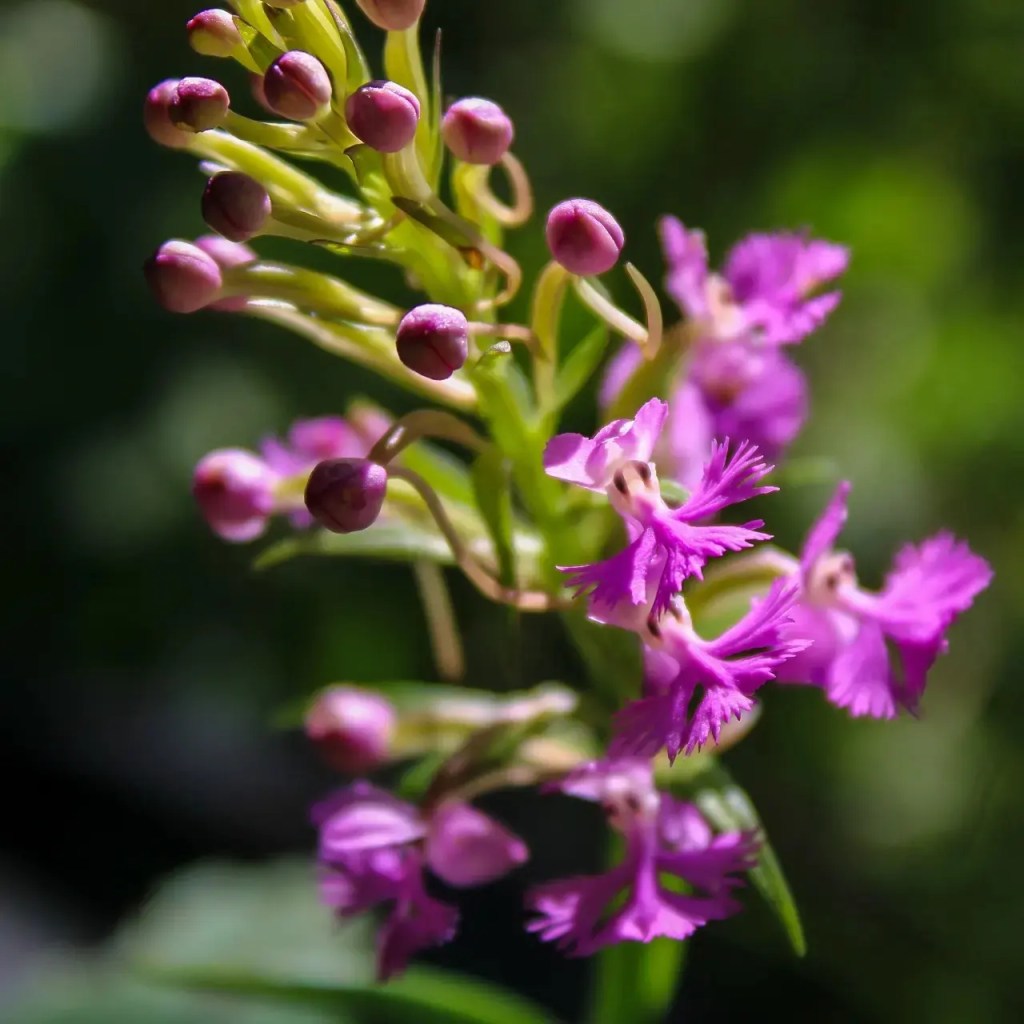
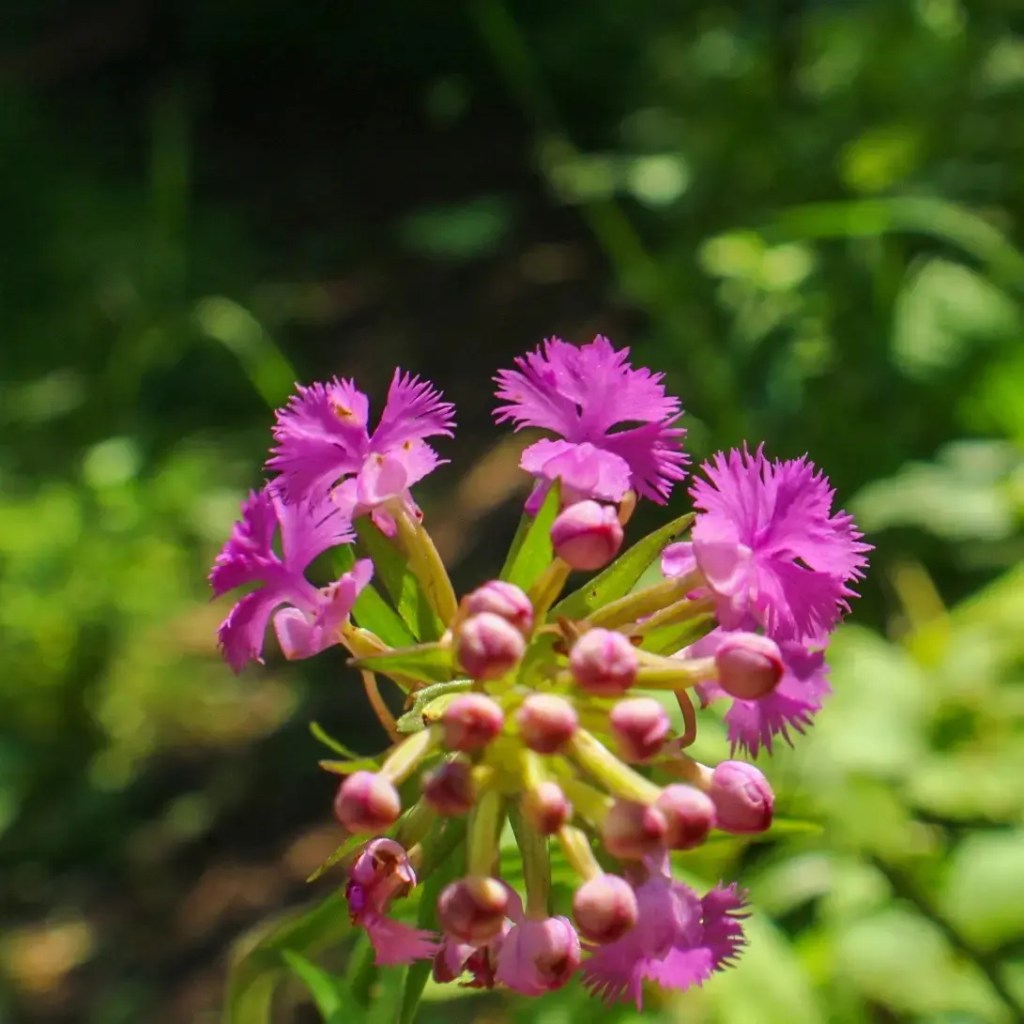


Secondly I’ll bring up an orchid that is thematically similar, The Ragged Fringed Orchid, Platanthera lacera. Another lover of the wet, P. lacera was found in mostly sunny spots within the same sedge meadow, amongst the Purple Pitcher Plant, Sarracenia purpurea, which can be seen creeping behind these gorg’ closeups.
Another moth-pollinated orchid (hope you’re not tired of hearing that), P. lacera‘s frilly attire is likely more than looks. Pollination is done mostly by the nocturnal moth, Anagrapha falcifera (Little 2005). Another orchid with intricate labellum frills is the Egret Orchid, Habenaria radiata, from Eastern Asia. I bring this up due to recent research on the adaptive benefit of labellum frills on the Egret Orchid. According to Suetsugu et. al, the frills act as, uh, love-handles, which help the hawkmoth get a better grip for that sweet, sweet nectar. In turn, the moth is able to pass on the pollinia better, resulting in more offspring.
The same sort of behaviors may be playing out with our fringed examples, P. psycodes & P. lacera.

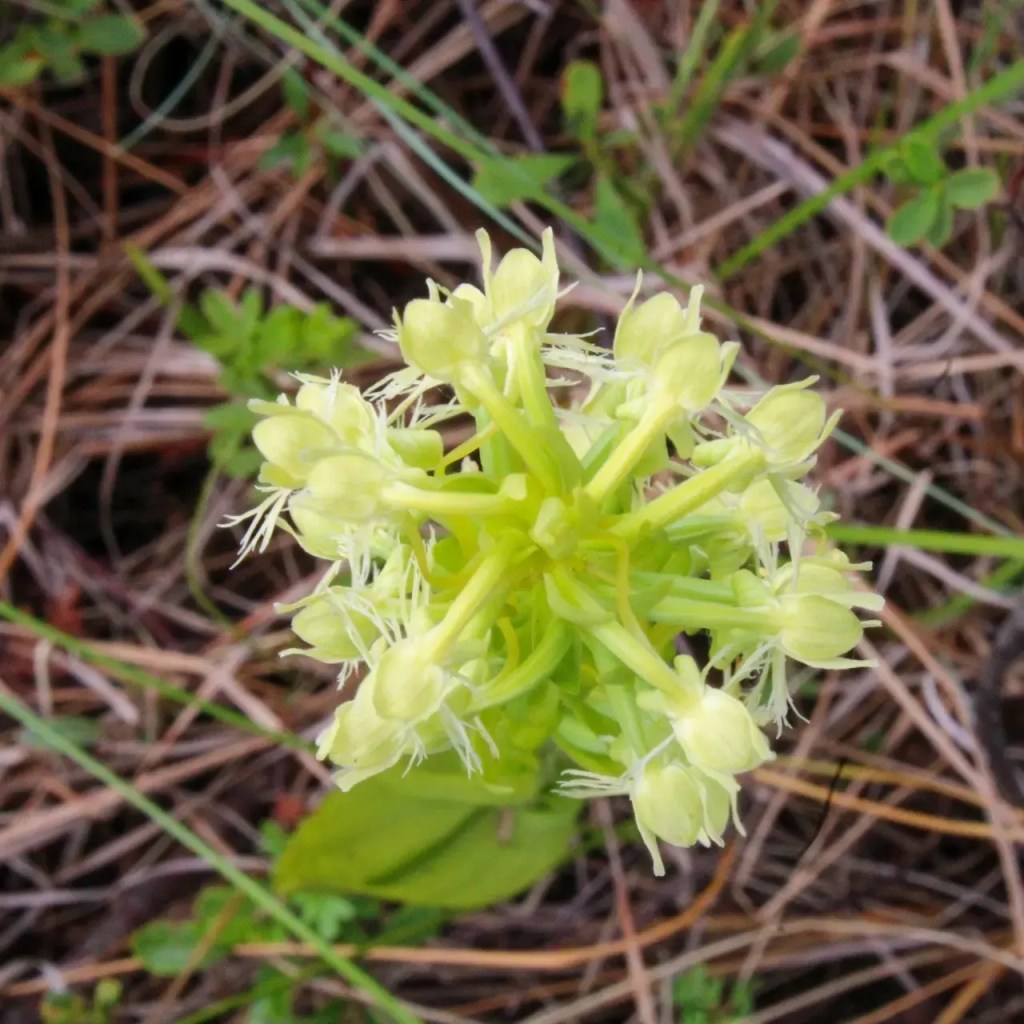

Next, let’s touch on hybridization and relatedness, using two orchids as examples. The Green Bog Orchid, Platanthera huronensis, is said to have been a result of hybridization from Platanthera dilatata & Platanthera aquilonis.
P. huronensis is a tetraploid, which means they have 4 copies of their chromosomes; this provides some evidence to their evolutionary past. When looking at both parents, you can see the similarities. Although, as with many things, the whole is greater than the sum of their parts; P. huronensis is much larger than either parent. The flowering stalk reached around 2 feet tall- quite impressive.
P. dilatata was the most prominent member of the orchid community I observed- with well over 20 individuals. They were quite possibly the most photogenic, which is unusual for me, as I tend to struggle getting the exposure right with white flowers. Anywho, a common name for these guys are Scentbottles, as their flowers smell like cloves- a good attractant for their moth pollinators. It’s currently thought that P. dilatata are going through a period of divergence through sexual selection by their pollinators, according to a paper written in 2014 by Adhikari & Wallace; an intricate relationship measured by the length of the nectar spurs which varies based on geographic location.
I encountered both of these species within the same sedge meadow as the two prior species. But they can both be found in bogs, fens, swamps, etc.

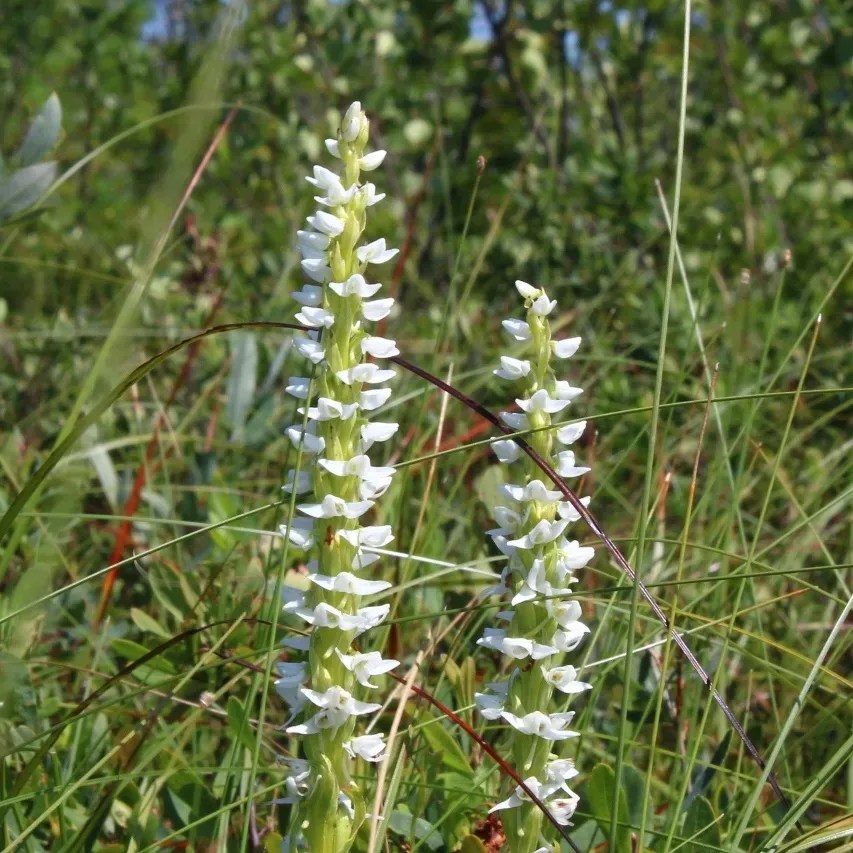
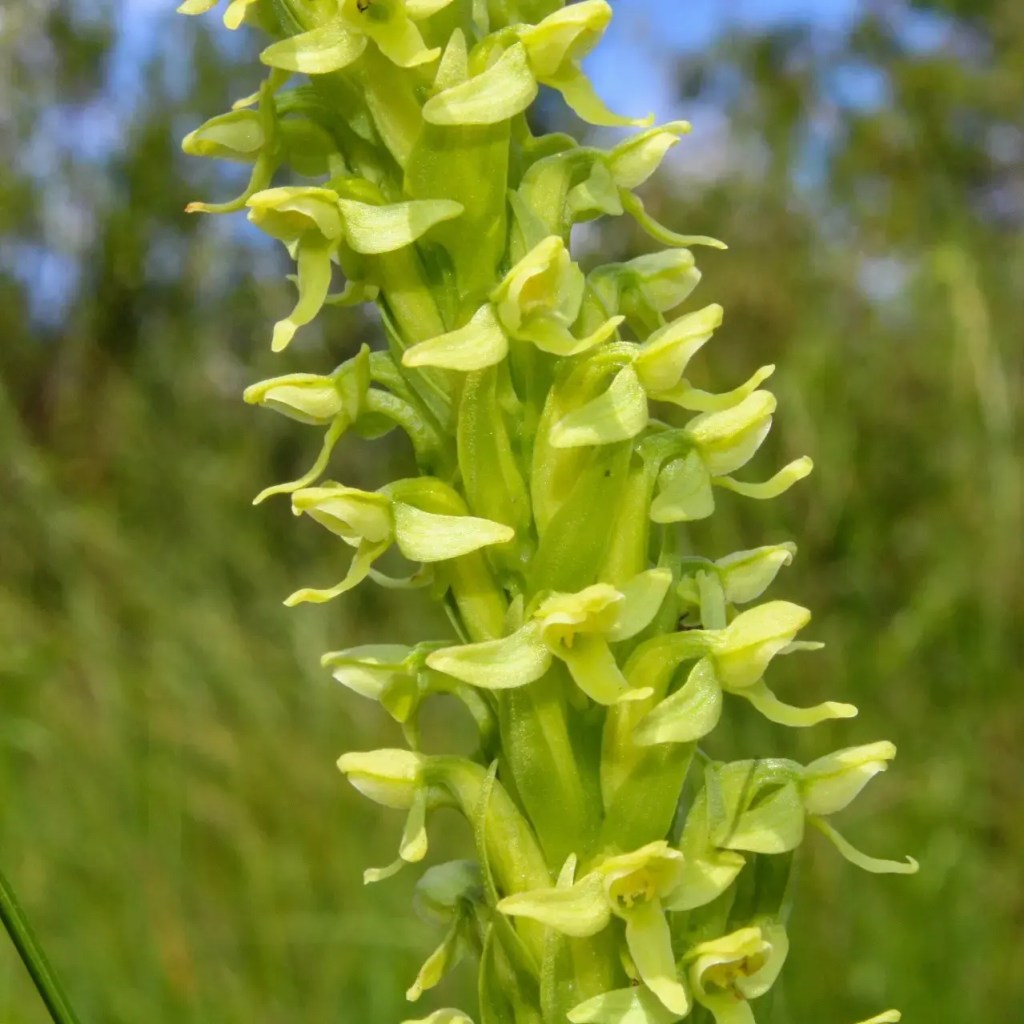

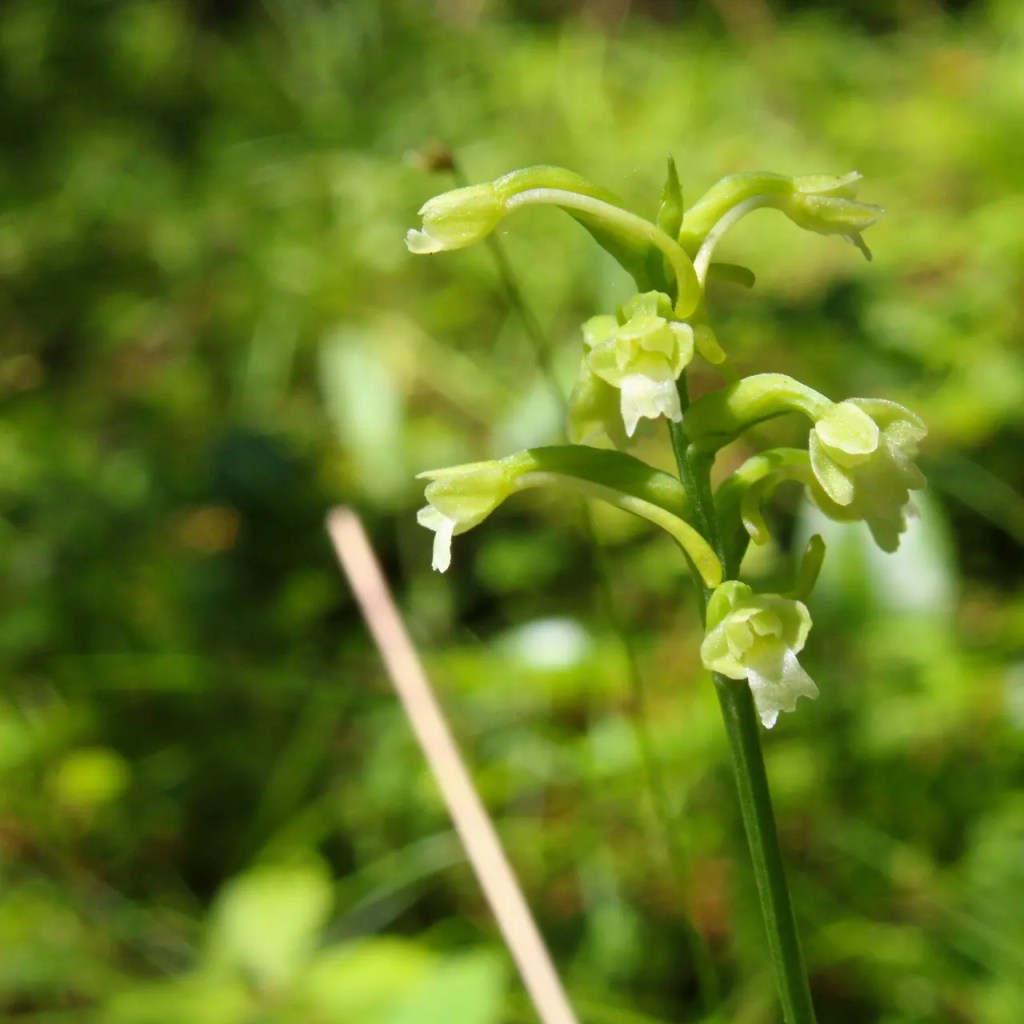
The final Platanthera member I encountered is a rather widespread and innocuous plant. The Green Wood Orchid, Platanthera clavellata, was found in a mossy hummock underneath the canopy of a cedar fen. I had seen this species before, sitting on another mossy hummock in Burton Wetlands, Burton, OH.
P. clavellata is largely a self-pollinating species- which is rather bizarre for this genus. Most Platanthera species are pollinated heavily by, you guessed it, moths. Look at those long nectar spurs- you need something with long tongues to reach that gooood sugar.
I’ve amateurishly hypothesized why P. clavellata is mostly self-pollinating in the past- that the species is transitioning away from insect pollination and towards selfing due to sexual selective pressures on the populations.
I’d imagine being a tiny, green orchid tucked in the undergrowth of a cramped forest, with no perfumes, makes it pretty hard for moths to find two individuals to cross-pollinate. Self-pollinating members are much more likely to pass their genes on.
Lastly, if a species is currently mostly selfing, having traits to attract pollinators such as floral color, nectar tubes, perfumes, resupinate flowers, etc. would likely receive a negative selection pressure; those traits cost energy to produce and that energy could be used elsewhere.
Buuuut all of this is speculation until someone studies this ghost-in-the-fen.. who knows, maybe that’ll be my Master’s work!

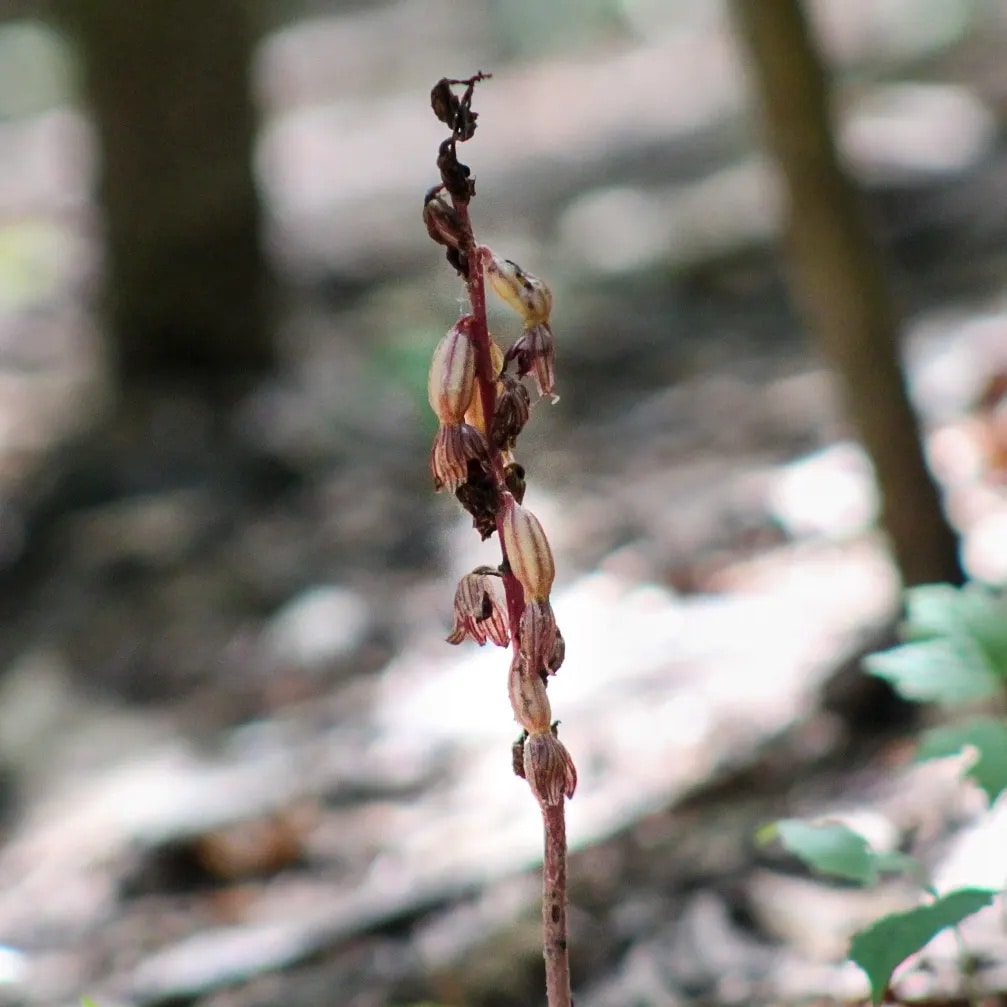
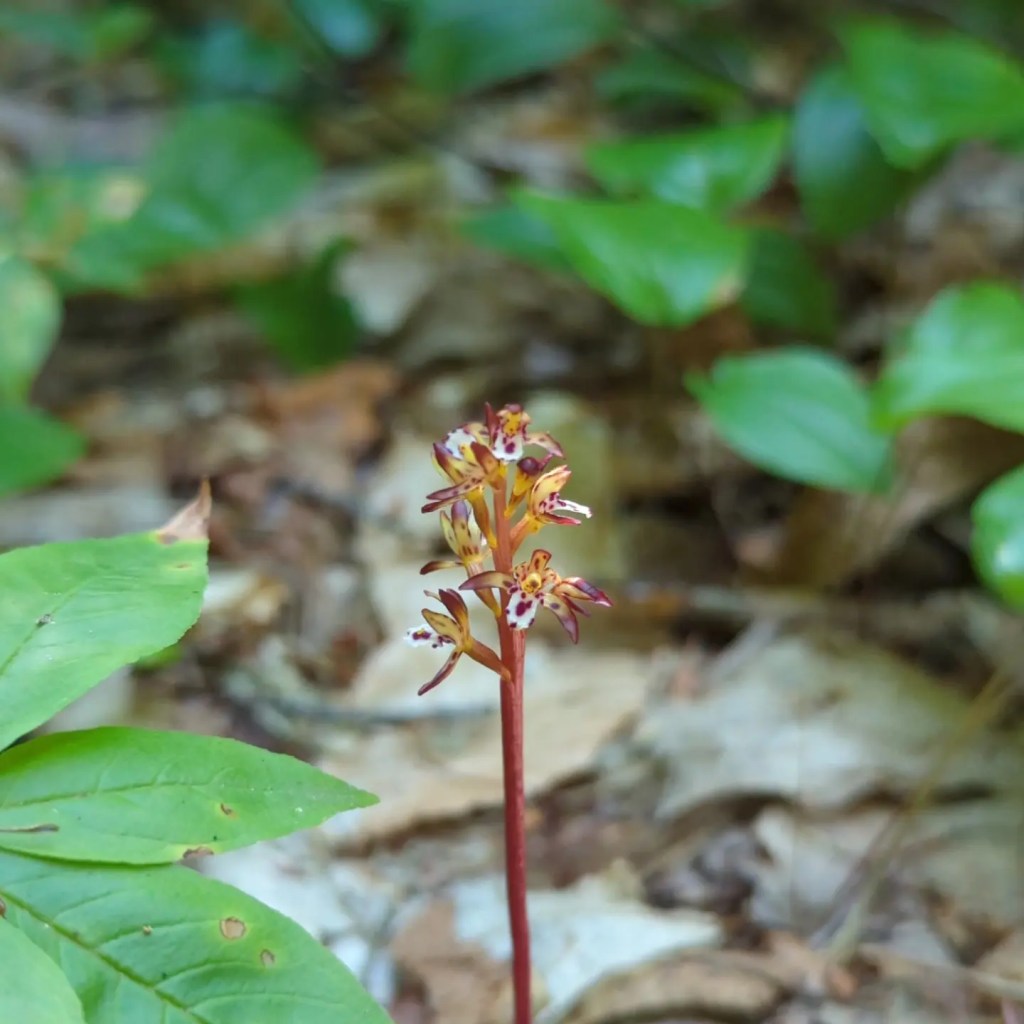
Finally, we have two exciting orchids that subsist off of mushrooms! Corallorhiza maculata & Corallorhiza striata are parasitic orchids, with no roots, nor chlorophyll within their tissues.
These orchids are known as mycoheterotrophs. Woah. What the hell does that mean, right? Myco refers to fungi; hetero refers to other; troph refers to nourishment. All together that means “other-nourishment from fungi.” Members of this genus commonly parasitize fungi in the family Russulaceae. Russulas are also commonly mycorrhizal fungi to trees- a type of symbiosis where the fungi receives sugars from a tree’s roots, and the tree has an increased uptake of water and nutrients. So, these orchids are siphoning off energy, water, & nutrients from fungi, who receive a lion’s share of that from a tree. Wow, what a fascinating ecological web.
To find these weirdos, head to a dry conifer forest, and look very low for their red racemes.

Citations
1. Adhikari, Binaya, and Lisa E. Wallace. “Does the Platanthera Dilatata (Orchidaceae) Complex Contain Cryptic Species or Continuously Variable Populations?” Plant Systematics and Evolution, vol. 300, no. 6, 2013, pp. 1465–1476., https://doi.org/10.1007/s00606-013-0974-8.
2. Little, Karen J., et al. “Pollination Ecology, Genetic Diversity and Selection on Nectar Spur Length in Platanthera Lacera (Orchidaceae).” Plant Species Biology, vol. 20, no. 3, 2005, pp. 183–190., https://doi.org/10.1111/j.1442-1984.2005.00137.x.
3. Suetsugu, Kenji, et al. “Specialized Petal with Conspicuously Fringed Margin Influences Reproductive Success in Habenaria Radiata (Orchidaceae).” Ecology, 2022, https://doi.org/10.1002/ecy.3781.


Leave a Reply